


The Resource Library stores all of ICTJ’s published works since 2001 to the present, grouped by category and searchable by key word, country, issue, language, and more.
We are continually adding new content from our archives, especially our Multimedia content. Check back regularly to explore newly added videos, photo galleries, and audio products.
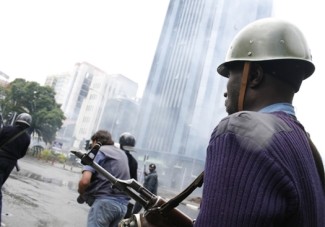
Kenya continues to deal with the repercussions of violence stemming from its disputed 2007 presidential elections, when political protests and targeted ethnic violence rocked the country, leaving thousands dead and hundreds of thousands displaced. Head of our Kenya office Chris Gitari gives an update on how Kenya is moving forward, and explains ICTJ's work in the country.
Lebanon should take firm steps to provide redress to victims of past conflicts and help prevent future violence, ICTJ and Lebanese rights groups said today at a roundtable discussion in Beirut. Lebanese authorities have mostly failed in their responsibility to end ongoing violations and ensure justice and truth for victims of the 1975-1990 war and successive conflicts.
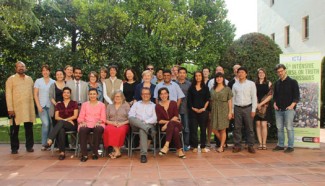
Transitional justice practitioners and activists from 18 different countries gathered in Barcelona to attend the 6th Intensive Course on Truth Commissions, organized by the ICTJ and the Barcelona International Peace Resource Center on September 29 - October 3.
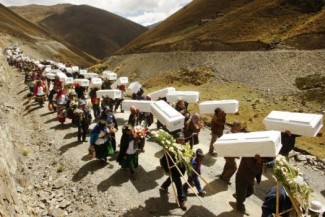
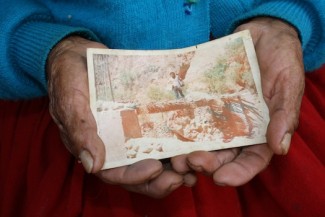
In this edition of the ICTJ Program Report, ICTJ Senior Associate Felix Reátegui discusses the principles behind the Truth and Memory program, and explains the imperatives of uncovering, acknowledging, and memorializing the past.
Annex to the publication, "'To Walk Freely with a Wide Heart' -A Study of the Needs and Aspirations for Reparative Justice of Victims of Conflict-Related Abuses in Nepal." (Nepali)
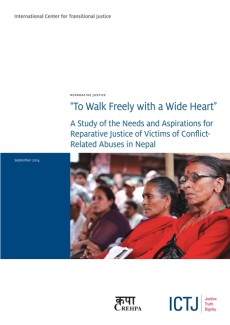
Annex to the publication, "'To Walk Freely with a Wide Heart' -A Study of the Needs and Aspirations for Reparative Justice of Victims of Conflict-Related Abuses in Nepal."
A new study by ICTJ finds that victims of human rights violations committed during Nepal’s 10-year armed conflict continue to experience hardship – and calls on the government to implement a comprehensive reparations program to respond to their acute and long-term needs.
This report presents the findings of an in-depth survey of more than 400 conflict victims in 10 districts of Nepal, researching their immediate and long-term needs and aspirations. Participants included those who had received benefits through the government’s Interim Relief Program an...
On the International Day of the Disappeared, ICTJ Vice President Paul Seils argues that addressing the legacy of forced disappearances is both a moral imperative and a pragmatic necessity.
This year, to mark the International Day of the Disappeared, we bring the story of Ziad and Ghassan Halwani, two brothers in Lebanon whose father was kidnapped and disappeared when they were young. Their story is a powerful testament to the long-term impact of disappearances on the life course of those who are still growing up.